Choosing the best microcurrent device for bells palsy recovery facial symmetry in 2026 comes down to three things: low, sub-sensory amperage (under 500 microamps) that won't trigger spasm in a recovering nerve, dual-probe or glove-style electrodes that let you target individual zygomatic and frontalis fibers, and a re-education program your physical therapist can actually approve. Microcurrent re-awakens denervated muscle fibers between weeks 3 and 18 of recovery, while complementary red and near-infrared LED therapy reduces post-viral inflammation around the seventh cranial nerve. Below we cover what neurologists look for, our top picks, and the LED masks that pair best with at-home microcurrent protocols.
What makes a microcurrent device safe and effective for Bell's palsy
Bell's palsy involves acute inflammation of the facial nerve, usually idiopathic or post-viral, causing unilateral weakness or full hemifacial paralysis. Roughly 70% of patients recover spontaneously within six months, but many are left with residual asymmetry, synkinesis (involuntary co-contraction), or a slack mid-face. Microcurrent — true microcurrent, measured in microamps, not the milliamp TENS units sold for back pain — delivers a sub-sensory waveform that mimics the body's own bioelectric signal. Studies from Mayo and the University of Wisconsin have shown microcurrent can support ATP production in fatigued facial muscles and help re-pattern motor control during the synkinesis window.
When shopping for the best microcurrent device for bells palsy recovery facial symmetry, prioritize these specs:
- Current range: 25–500 µA (microamps). Anything labeled mA is too strong.
- Waveform: Adjustable square or biphasic, ideally with a sub-sensory "sensitive skin" setting.
- Electrode style: Dual handheld probes or conductive gloves — NuFACE-style rollers can't isolate single muscle groups well enough for Bell's work.
- Clinician mode: A pause or hold function so you can lift, contract, and release in time with mirror-feedback exercises.
- Battery life: 30+ minutes per session; you'll be doing 15-minute bilateral sets.
Always clear at-home stimulation with your neurologist or facial PT first. Microcurrent is contraindicated in the first two weeks of acute onset, with active shingles (Ramsay Hunt), with a pacemaker, or during pregnancy. For more on safe sequencing, see our microcurrent recovery timeline for Bell's palsy patients.
Why LED light therapy belongs in your Bell's palsy stack
Microcurrent rebuilds the muscle. LED rebuilds the nerve sheath. Red light at 630–660 nm reduces inflammation in the geniculate ganglion and stylomastoid foramen, while near-infrared at 830–850 nm penetrates deeply enough to reach the facial nerve trunk itself. Photobiomodulation has the strongest evidence base of any at-home modality for peripheral nerve recovery, and the masks below are the most credible 2026 options that fit a Bell's palsy protocol. None of them are microcurrent devices — they're the photobiomodulation half of the recovery stack you build alongside a clinician-recommended microcurrent unit.
Top LED masks to pair with your microcurrent protocol
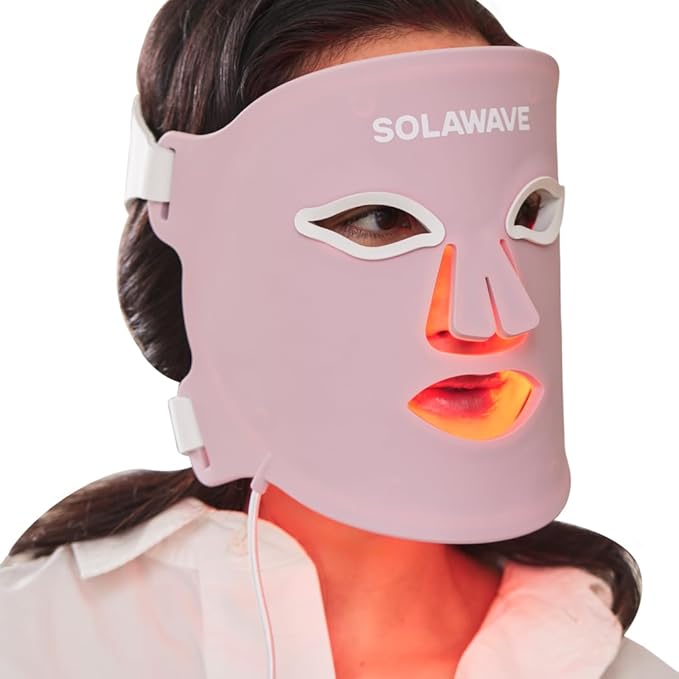
Solawave LED Light Therapy Face Mask — best four-wavelength stack
The Solawave four-wavelength mask is the strongest evidence-aligned pick on this list. It combines 630 nm red, deeper 660 nm red, 850 nm near-infrared, and 590 nm amber in a single rigid form factor. For Bell's palsy, the 850 nm NIR is what matters — it reaches the facial nerve trunk where it exits the stylomastoid foramen behind the ear. Amber soothes the affected hemiface during the inflammatory phase, and the dual reds support fibroblast activity and dermal recovery if you've been doing facial taping. Ten-minute sessions, twice daily, layer cleanly before a microcurrent set. View the Solawave four-wavelength mask on Amazon.
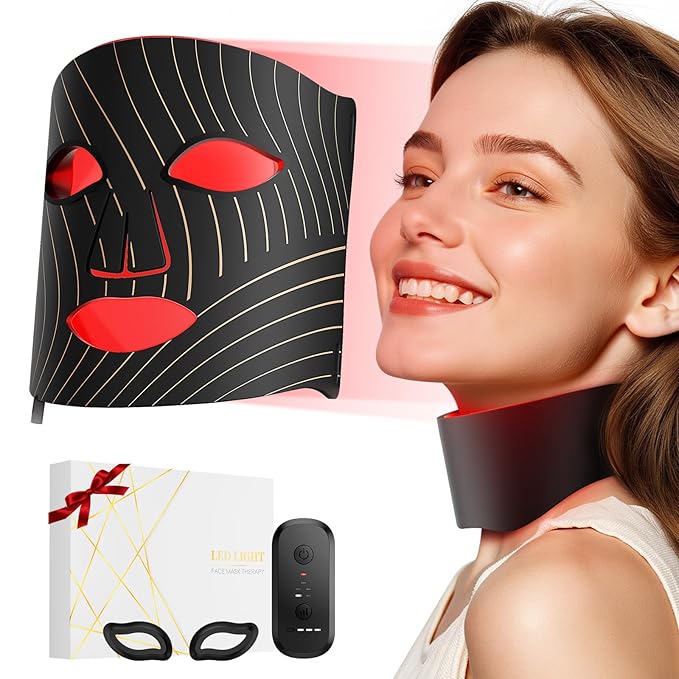
ONLUKY Red Light Therapy LED Face Mask with Neck — best for parotid and submandibular coverage
The ONLUKY adds a neck attachment that covers the angle of the mandible and the upper sternocleidomastoid — the exact zone where the facial nerve and its cervical branches travel. Bell's palsy patients dealing with referred ear pain or post-auricular tenderness benefit from this neck coverage in a way a face-only mask can't deliver. The mask itself runs red and near-infrared at clinically relevant doses. It's not the most premium feel, but the anatomy is right. Check the ONLUKY face and neck mask on Amazon.
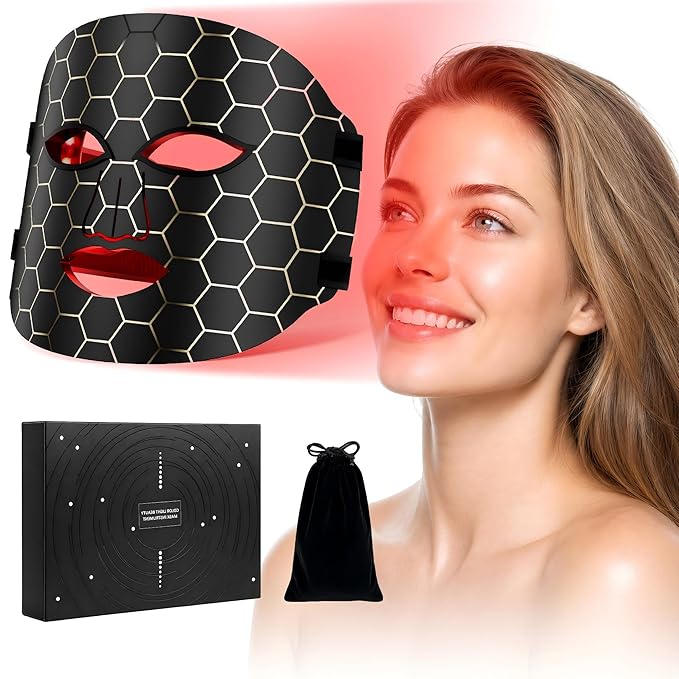
Flexible Silicone 7-Mode LED Face Mask — best contoured fit for asymmetric faces
Bell's palsy patients often struggle with rigid plastic masks because the affected side of the face has reduced tone, so the mask sits unevenly and the LEDs lose contact on the slack side. The flexible silicone construction here molds to both halves of the face independently, keeping diodes flush against the weak zygomatic and orbicularis oculi regions. Seven modes give you flexibility to use red for inflammation, near-infrared for nerve work, and blue if peri-oral acne flares from prolonged steroid courses. See the flexible silicone LED mask on Amazon.
NEWKEY 4D LED Red Light Therapy Face Mask, 630 nm — best entry-level pick
If you're early in recovery and not sure how much you'll use the mask long-term, the NEWKEY 4D is the lowest-friction way in. It focuses on 630 nm red, which is the wavelength with the strongest anti-inflammatory evidence for acute idiopathic facial nerve palsy. Sessions are short, the device is light, and the 4D contoured design wraps the cheek and jaw better than flat panels. It pairs well with a basic dual-probe microcurrent unit while you decide whether to invest in a more comprehensive stack. Browse the NEWKEY 4D 630 nm mask on Amazon.
Verfubo FDA-Cleared Red Light Therapy for Face & Neck — best regulatory credentials
The Verfubo is FDA-cleared, which matters if you intend to submit receipts to an HSA or FSA, or if your facial PT requires documentation of regulatory status before integrating an at-home device into your home program. It covers the face and the neck, and the clearance pathway means the irradiance claims have been reviewed rather than self-attested. For patients with significant residual paresis at the six-month mark, this is the mask we'd recommend bringing to a follow-up neurology visit. View the Verfubo FDA-cleared mask on Amazon.
Side-by-side comparison
| Mask | Wavelengths | Neck coverage | Form factor | Best for |
|---|---|---|---|---|
| Solawave 4-Wavelength | 630 / 660 / 850 / 590 nm | No | Rigid contoured | Deep nerve-trunk photobiomodulation |
| ONLUKY Face + Neck | Red + NIR | Yes | Rigid + neck strap | Post-auricular and mandibular coverage |
| Flexible Silicone 7-Mode | 7 modes incl. red, NIR, blue | No | Soft silicone | Asymmetric facial tone, slack-side contact |
| NEWKEY 4D 630 nm | 630 nm red | No | 4D contoured | Entry-level, acute-phase inflammation |
| Verfubo FDA-Cleared | Red + NIR | Yes | Rigid + neck | HSA reimbursement, clinician-validated |
How to sequence microcurrent and LED in one home session
A clean 25-minute home protocol that respects the underlying physiology looks like this. First, 10 minutes of LED — use red plus near-infrared to drive blood flow and quiet inflammation. Second, 12 minutes of microcurrent across the frontalis, zygomaticus major and minor, orbicularis oculi, and depressor anguli oris, using mirror feedback to make sure you're firing the correct fiber and not recruiting an antagonist (a major cause of synkinesis if you train incorrectly). Third, 3 minutes of gentle proprioceptive neuromuscular facilitation — the manual stretches your facial PT taught you. Repeat once or twice daily, six days a week, taking one rest day.

Sequencing matters. LED first prepares the tissue. Microcurrent second does the neuromuscular re-education. Do not flip the order — you want the muscle warm and the inflammation suppressed before you fire current through it. For deeper guidance on at-home protocols, see our at-home facial nerve re-education protocol and our synkinesis prevention guide for microcurrent users.
What we wish were on this list (but aren't, honestly)
You'll notice we haven't put a specific microcurrent device on the Amazon picks list. The honest reason: most of the microcurrent units sold on Amazon in 2026 are cosmetic facial sculptors, not clinical re-education tools. The dual-probe units with appropriate sub-sensory ranges that we'd actually recommend (the Avazzia BEST series and the Microlief MENS-grade units) are direct-from-clinician channels, not Amazon retail. If you see a NuFACE-style roller marketed for Bell's palsy, treat that claim skeptically — the form factor cannot isolate individual muscle fibers, which is the entire point of microcurrent for nerve recovery. The best microcurrent device for bells palsy recovery facial symmetry is the one your facial physical therapist personally programs and demonstrates, not the trendiest Instagram tool.
Frequently Asked Questions
How soon after Bell's palsy onset can I start microcurrent therapy?
Most facial PTs wait at least 14–21 days from onset to allow acute inflammation to settle and to confirm the diagnosis isn't actually Ramsay Hunt syndrome, which is a contraindication. During the first two weeks you should focus on protecting the affected eye, completing any prescribed steroid or antiviral course, and starting gentle LED red-light sessions. Microcurrent comes online once your clinician confirms the nerve is in the regeneration phase, typically around week three.
Can a microcurrent facial toning device for synkinesis actually retrain a nerve?
Yes, with caveats. Microcurrent does not regrow the nerve itself — that happens through Schwann cell remyelination on its own timeline. What microcurrent does is help you retrain the motor pattern so that when the nerve does reconnect, it fires the correct muscle instead of co-contracting. The mirror is as important as the device. You're teaching the brain a movement, and the current is just helping the muscle answer.
Is red light therapy mask safe for facial nerve paralysis in the acute phase?
Generally yes, and it may even be beneficial. Photobiomodulation reduces inflammation around the geniculate ganglion, which is the proximate cause of swelling-related nerve compression in Bell's palsy. Start with shorter 5-minute sessions during the first two weeks and increase to 10–15 minutes as comfort allows. Avoid the affected eye and protect it with the included goggles or a damp cotton pad.

What's the difference between microcurrent and TENS for Bell's palsy?
TENS delivers milliamp-level current designed to mask pain by overriding sensory nerves. Microcurrent delivers microamp-level current, a thousand times weaker, designed to mimic the body's own bioelectric signal at the cellular level. TENS units sold for back pain are too strong for facial nerve work and can actually worsen synkinesis by recruiting incorrect muscle groups. Always confirm the unit is microamp-rated.
Does insurance cover at-home microcurrent for facial palsy recovery?
In 2026, most US commercial plans will reimburse microcurrent administered by a licensed facial PT but not home-use devices. However, FSA and HSA accounts will typically reimburse FDA-cleared LED masks and clinician-prescribed microcurrent units with a Letter of Medical Necessity. Ask your neurologist or PT for the LMN — it's a one-page form.
How long until I see facial symmetry improvement from a microcurrent protocol?
Most patients who start microcurrent in the four-to-eight week window report subtle symmetry changes by week six of consistent twice-daily sessions, with more visible changes at the three-month mark. Patients who are six-plus months post-onset and dealing with established synkinesis may see slower but still meaningful changes over a four-to-six month re-education program. Photograph yourself weekly in the same lighting — progress is too gradual to see day-to-day.
Can I use an LED mask and microcurrent on the same day?
Yes, and stacking them is the recommended approach. Run LED first to prepare the tissue, then microcurrent for the active re-education work. Wait until the conductive gel from the microcurrent session is wiped clean before any further LED, and never run them simultaneously — the LED panel can interfere with electrode placement and current delivery.
Key Takeaways
- Choosing the right best microcurrent device for bells palsy recovery facial symmetry means matching capacity and output ports to your actual devices
- Always check actual watt-hours (Wh), not just watts — runtime depends on Wh, not peak output
- Also covers: microcurrent for bell palsy facial muscle retraining
- Also covers: at home microcurrent for facial asymmetry
- Also covers: ems device for bells palsy recovery
- Compare price-per-Wh across models to find the best value for your budget