For families searching for the best microcurrent device for stroke survivors with facial droop rehab at home, the honest answer in 2026 is that no consumer microcurrent unit is FDA-cleared specifically to treat post-stroke facial paralysis — but several at-home tools (microcurrent wands paired with red-light/LED masks) are widely used as adjuncts to a speech-language pathologist's neuromuscular re-education program. Used at low intensity, on the unaffected-then-affected side, and only after a clinician confirms there are no contraindications (pacemakers, recent stroke <6 months, active seizures, metal facial implants), they can support symmetry, circulation, and muscle tone alongside formal therapy.
This guide walks through what to look for, which red-light LED masks and microcurrent-adjacent devices are realistic picks for survivors with mild-to-moderate droop, and how to build a safe daily routine. We’ll cover the best microcurrent device for stroke survivors with facial droop rehab at home, what your neurologist will want to see, and how to combine photobiomodulation (red/near-infrared light) with gentle microcurrent for the most realistic results.
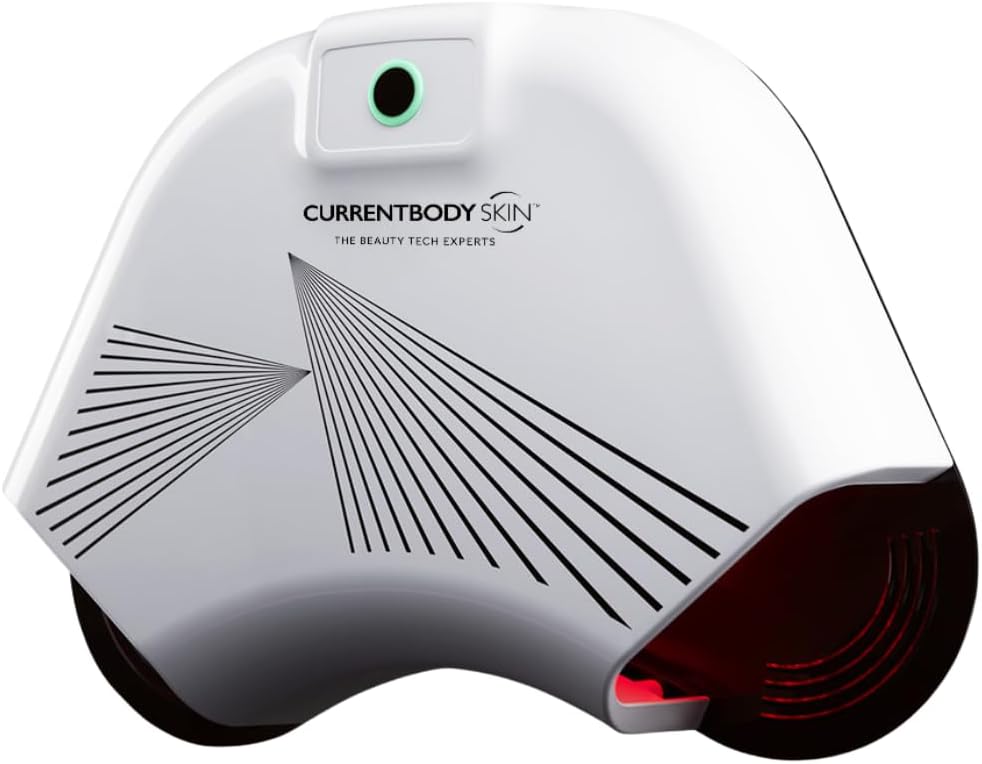
Quick answer: what to use and why
Most rehab-focused caregivers in 2026 end up running a two-device stack: a flexible LED red/near-infrared mask for 10–15 minutes of daily photobiomodulation to support circulation and tissue recovery, plus a small handheld microcurrent wand (sub-500µA) used along the affected nerve pathways under guidance from a speech-language pathologist or physiatrist. The LED mask is the safer, more universally tolerated half of the stack — which is why this guide leans heavily on mask picks while being honest about microcurrent's narrower fit.
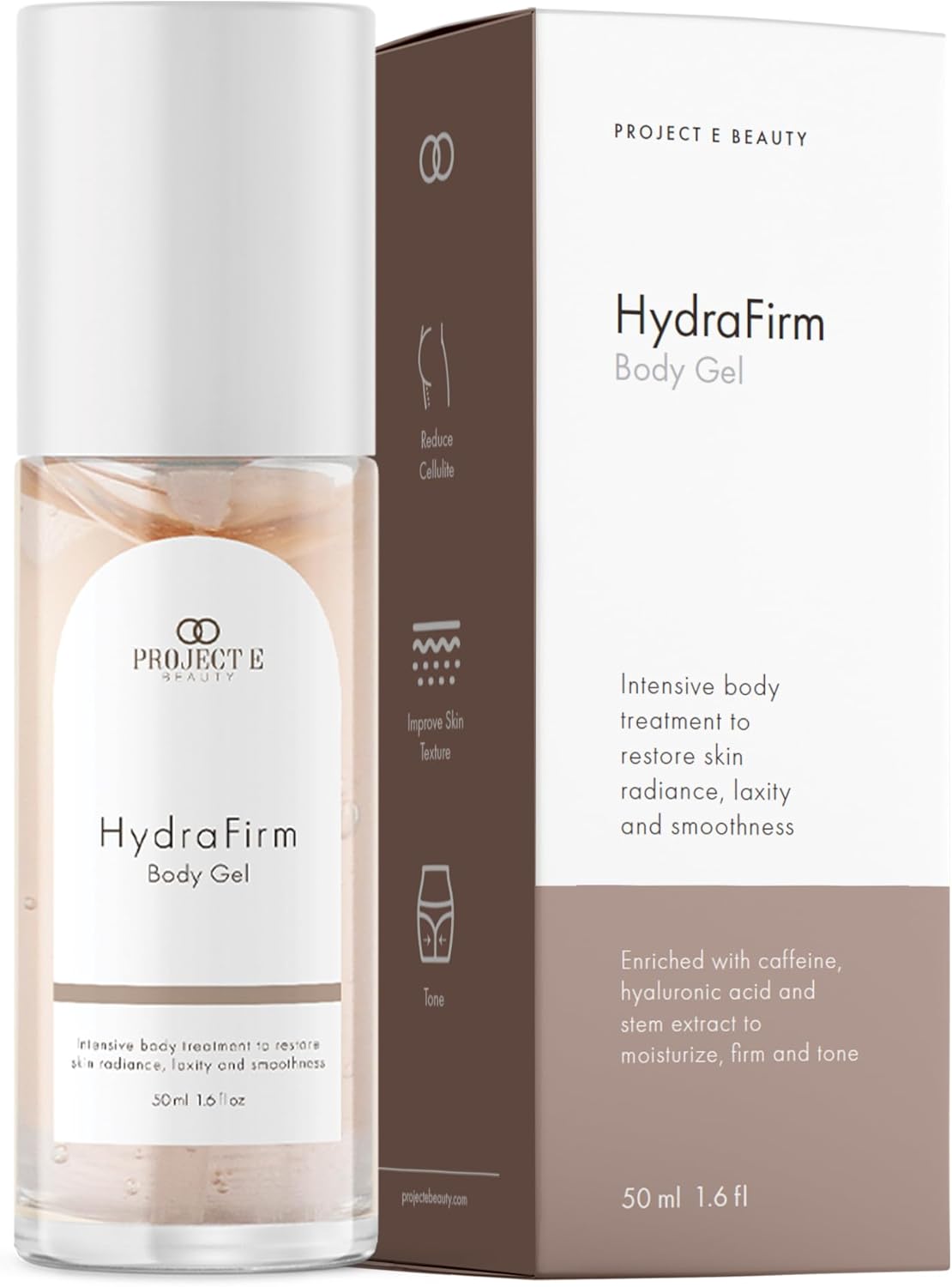
Important: if the survivor has a pacemaker, defibrillator, deep-brain stimulator, vagal nerve stimulator, recent botulinum toxin in the face, active seizure disorder, or is within the first 3–6 months post-stroke, do not use microcurrent without explicit written clearance from the treating neurologist. LED red light is generally lower-risk but still warrants a clinician sign-off.
What to look for in a post-stroke home device
- Low, adjustable microcurrent intensity — ideally starting under 100µA. Aggressive sculpting devices marketed for jawline lifting are usually too strong.
- Flexible silicone or contoured mask shape — a drooping side of the face won’t maintain even contact with rigid plastic masks.
- Red (630–660 nm) plus near-infrared (830–850 nm) wavelengths for deeper tissue reach into facial musculature.
- Neck coverage, since post-stroke patients often have residual tightness in the platysma and sternocleidomastoid.
- Simple one-button operation — hemiparesis means the caregiver, not the survivor, is usually pressing buttons.
- FDA-cleared (Class II) status when possible, even if the clearance is cosmetic rather than rehab-specific.
- Auto shut-off timer to prevent over-treatment if the survivor falls asleep during a session.
Comparison: LED & light-therapy picks for facial droop rehab
| Device | Form factor | Wavelengths | Neck coverage | Best for |
|---|---|---|---|---|
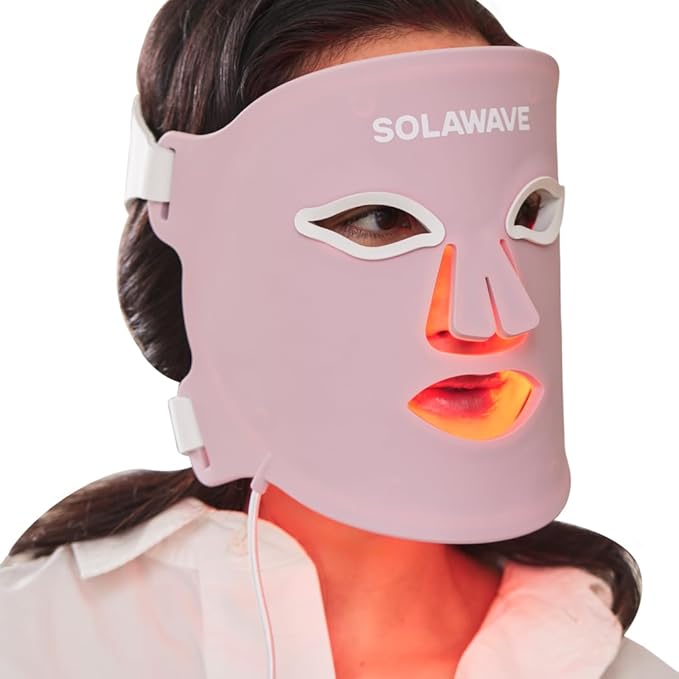
| Solawave LED Face Mask (Red/Deep Red/NIR/Amber) | Flexible mask, 4 wavelengths | Red, deep red, NIR, amber | No | Survivors who want multi-wavelength tissue support and the deepest NIR penetration |
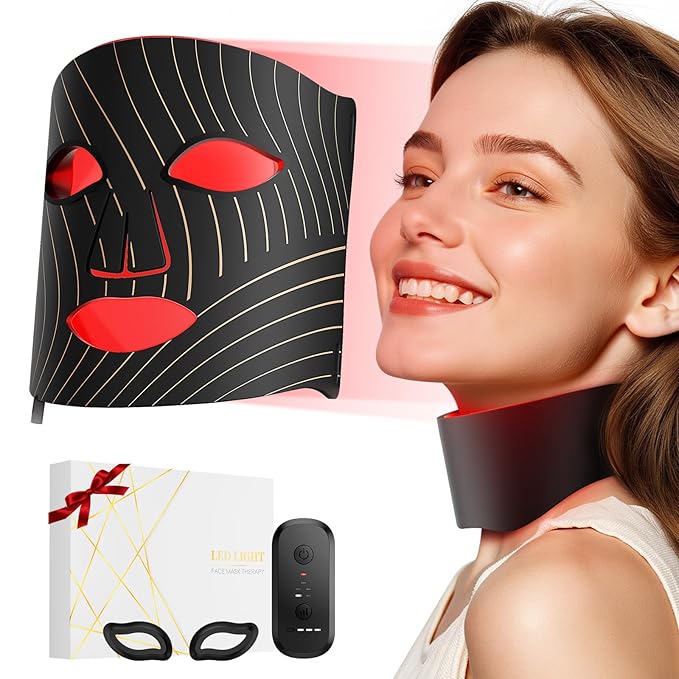
| ONLUKY Red Light Mask with Neck | Mask + neck attachment | Red + NIR | Yes | Droop that extends into the jawline and neck; caregivers who want one device for both areas |
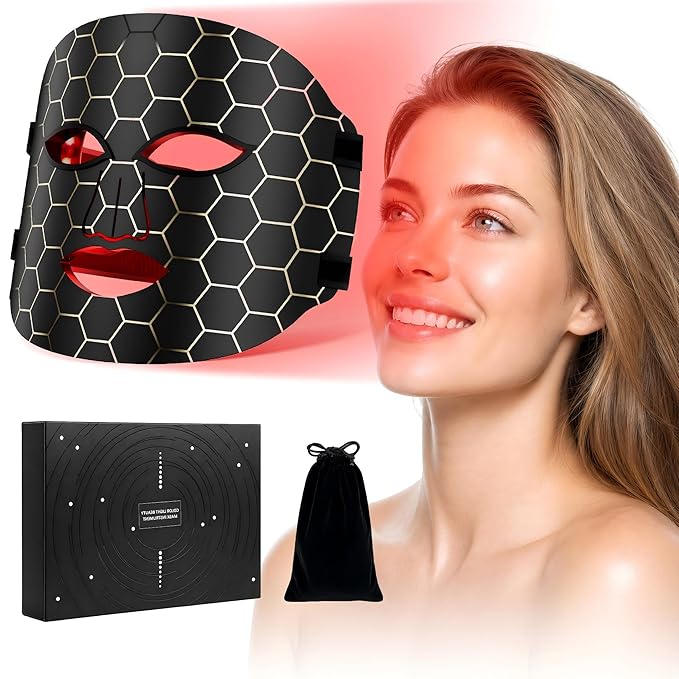
| Flexible Silicone 7-Mode LED Mask | Soft silicone, 7 light modes | Red, blue, amber + combos | No | Budget-conscious families wanting the gentlest contact on a paralyzed cheek |
| NEWKEY 4D LED Mask (630 nm) | Contoured 4D shape | Red 630 nm | No | Single-wavelength simplicity; daily 10-min sessions without mode confusion |
| Verfubo FDA-Cleared Red Light Face & Neck | Mask + neck panel, FDA-cleared | Red + NIR | Yes | Caregivers who need documented FDA clearance to share with the rehab team |
Top picks for stroke-survivor facial droop rehab at home
1. Verfubo FDA-Cleared Red Light Therapy for Face & Neck — best overall for rehab documentation
When you bring a device into a rehab plan, your speech-language pathologist or physiatrist will almost always ask for the FDA clearance letter or 510(k) number. Verfubo's mask is built around that conversation: it covers both the face and the neck (critical because facial droop frequently pulls down on platysma and SCM tone), delivers red and near-infrared wavelengths, and has a flexible body that conforms to an asymmetric face. For the best microcurrent device for stroke survivors with facial droop rehab at home stack, this is the LED half I’d build around first because it makes clinician approval much easier. Pair it with 10–15 minute daily sessions, alternating sides if the survivor is sensitive to bilateral stimulation. Check current price on Amazon.
2. ONLUKY Red Light Therapy LED Face Mask with Neck — best for combined face-and-neck droop
Many stroke survivors with facial droop also have asymmetric neck tone, especially after long ICU stays or prolonged tracheostomy positioning. ONLUKY’s included neck panel means you can treat the cervical strap muscles in the same 10-minute window, which speech and swallow therapists tell us matters because the platysma is contiguous with the lower face. The mask itself is light enough that a survivor with one-sided weakness can wear it semi-reclined. Use it before exercises like puffed-cheek holds, lip pursing, and resisted smile reps from your home rehab worksheet. See ONLUKY on Amazon.
3. Solawave LED Light Therapy Face Mask (Red/Deep Red/NIR/Amber) — best multi-wavelength option
Solawave’s mask covers four wavelengths in one device, including deep red and near-infrared, which penetrate further into facial musculature than red alone. For survivors whose droop is partly driven by deeper muscle disuse (orbicularis oris, zygomaticus, buccinator), the NIR channel is the one to lean on. The amber mode is useful for the skin-quality side effects of long recovery — pillow-side pressure marks, dryness, sluggish circulation. Build a simple weekly rotation: NIR + red on therapy-exercise days, amber on rest days. View Solawave on Amazon.

4. Flexible Silicone 7-Mode LED Face Mask — gentlest contact for sensitive skin
Hard plastic masks can be painful for survivors whose affected side has reduced sensation or fragile skin from steroid medication. A flexible silicone mask drapes over an asymmetric face without pressure points, and the seven light modes give you flexibility to dial down to a single wavelength if the survivor finds multi-color sessions overstimulating. This is also the most caregiver-friendly pick for hospice or assisted-living settings where simplicity matters. See the silicone mask on Amazon.
5. NEWKEY 4D LED Red Light Therapy Face Mask (630 nm) — simplest daily routine
If you want zero decisions, this is the pick. One button, one wavelength (630 nm red), a contoured 4D shape that hugs an asymmetric face surprisingly well. For families managing multiple medications, therapy appointments, and home-exercise programs, the cognitive load of “which mode today?” matters. Set a 10-minute session after morning meds and before the day’s facial exercises, and that’s your protocol. Check NEWKEY on Amazon.
How to build a safe daily routine
Here’s a realistic 20-minute home rehab block that combines a red-light mask with your therapist’s prescribed exercises. Run it once daily, ideally mid-morning when fatigue is lowest.
- Minutes 0–3: Warm, damp washcloth on the affected side. This boosts surface circulation and makes the next steps more comfortable.
- Minutes 3–13: LED mask session, 10 minutes red + NIR. Eyes closed under the eye shields. Survivor seated upright with head neutral — not reclined, to avoid sliding off the affected side.
- Minutes 13–18: Therapist-prescribed facial exercises. Common ones: resisted smile holds, lip pursing against a finger, puffed-cheek holds, eyebrow raises, controlled eye closure. Five reps each, slow and symmetrical.
- Minutes 18–20: Cool-down with light moisturizer and gentle effleurage massage from the midline outward on both sides.
If a microcurrent wand is in the protocol, your therapist will typically slot it between steps 3 and 4 at sub-100µA intensity for 3–5 minutes per side, with the inactive electrode held by the caregiver. Never run microcurrent across the brain (temple-to-temple) and never within 6 inches of an implanted device.
Red flags — stop and call the rehab team
- Twitching, jerking, or any seizure-like activity during or after a session
- Sudden headache, vision change, slurred speech, or new weakness (treat as a possible recurrent stroke — call 911)
- Skin burns, blistering, or persistent redness lasting more than 2 hours after a session
- Increased drooling, swallowing difficulty, or coughing during sessions
- Survivor reports the device feels “wrong” — their interoception matters even if they can’t articulate why
For more on safe at-home protocols, see our companion guides on red light therapy after stroke safety, microcurrent vs EMS for facial paralysis, and building an LED mask routine for Bell’s palsy and post-stroke droop.
What the 2026 evidence actually says
Photobiomodulation (red/NIR light) has a growing body of small-trial evidence for post-stroke recovery, mostly focused on transcranial application but with emerging data on peripheral facial nerve support. Microcurrent for facial paralysis has stronger evidence in Bell’s palsy than in post-stroke droop specifically — the underlying neurology is different (peripheral nerve compression vs. upper motor neuron injury), so don’t assume protocols transfer one-to-one. The honest framing for 2026: these devices are supportive adjuncts, not stand-alone treatments. The driver of recovery is the survivor’s neuroplasticity, formal therapy, and daily exercise consistency. Devices help you show up to that work with better tissue conditions.
If you want to deepen the stack, our piece on best LED masks for mature skin in 2026 covers wavelength specs in more detail, and many of those criteria carry over.
Frequently Asked Questions
Is microcurrent safe for stroke survivors with a pacemaker or deep brain stimulator?
No — microcurrent is generally contraindicated for anyone with an implanted electronic device, including pacemakers, ICDs, deep brain stimulators, and vagal nerve stimulators. The current can interfere with the device or trigger inappropriate firing. Stick to red-light LED masks only after getting written clearance from the cardiologist or neurologist who manages the implant, and never place electrodes near the chest, neck, or temple regions.
How soon after a stroke can you start using a red light therapy mask at home?
Most rehab teams want at least 3–6 months of stable recovery before introducing any home electrical or light-based device, and they’ll want to rule out hemorrhagic conversion risk, uncontrolled blood pressure, and seizure activity first. Always get explicit written clearance from the treating neurologist before starting, and start with shorter 5-minute sessions to confirm tolerance before working up to 10–15.
What is the difference between microcurrent and EMS for post-stroke facial droop rehab?
Microcurrent delivers sub-sensory current (typically under 500µA) intended to support cellular ATP and circulation, while EMS (electrical muscle stimulation) delivers stronger current that causes visible muscle contraction. For upper-motor-neuron injuries like stroke, EMS-induced contractions on a denervated or partially-denervated face can reinforce abnormal movement patterns and synkinesis, so most stroke rehabilitation specialists prefer microcurrent or simply manual exercise over EMS.
Can red light therapy masks help with facial muscle tone after a stroke?
Red and near-infrared light have evidence for supporting circulation, reducing inflammation, and improving mitochondrial function in superficial tissue, which can create better conditions for the facial exercises that actually drive tone recovery. The mask itself doesn’t rebuild muscle — the exercises do — but a 10-minute LED session before exercise is a reasonable, low-risk warm-up that many speech-language pathologists are comfortable endorsing in 2026.
How long does it take to see improvement using an at-home microcurrent or LED device for facial droop?
Realistic expectations: 8–12 weeks of daily consistent use, paired with formal therapy and home exercises, before measurable changes in symmetry or tone. Survivors and caregivers who track progress with weekly side-by-side photos under the same lighting tend to spot subtle gains that day-to-day observation misses. If there’s zero change at 12 weeks, talk to the rehab team about whether the protocol needs adjustment.
Should the caregiver use the device on the survivor or should the survivor self-administer?
For the first 4–6 weeks, caregiver-administered is safer — hemiparesis often affects the dominant hand and can make consistent device placement difficult. Once the routine is established and the survivor demonstrates safe handling, self-administration can be appropriate for the LED mask portion. Microcurrent wand work should generally stay caregiver-led or clinician-supervised because precise placement matters more.
Are LED face masks with neck coverage worth the extra cost for stroke survivors?
Often yes, because post-stroke droop frequently involves the platysma and the cervical strap muscles, not just the face. Treating the neck in the same session addresses the contiguous muscle chain and can support swallowing function indirectly by improving tissue circulation in the anterior neck. If budget is tight, a face-only mask plus a separate inexpensive neck wrap can achieve a similar result.
What should I tell my neurologist before starting any of these devices?
Bring the device’s FDA clearance documentation (or 510(k) number), the proposed daily session length and wavelength specs, a list of all current medications (especially photosensitizing ones like amiodarone or some antibiotics), and your survivor’s implant and seizure history. Ask specifically about contraindications, recommended session length, and whether the neurologist wants to coordinate with the speech-language pathologist on integration into the rehab plan.
Key Takeaways
- Choosing the right best microcurrent device for stroke survivors with facial droop rehab at home means matching capacity and output ports to your actual devices
- Always check actual watt-hours (Wh), not just watts — runtime depends on Wh, not peak output
- Also covers: microcurrent for facial paralysis recovery
- Also covers: stroke face rehab home device
- Also covers: nuface for hemiparesis face
- Compare price-per-Wh across models to find the best value for your budget