As an Amazon Associate this site earns from qualifying purchases.
Recommended Products We Currently Stand Behind
These three represent the categories we review most often, and each has cleared our full 6-week protocol.
| Device | Category | Price | Our Rating | |
|---|---|---|---|---|
| CurrentBody Skin LED Mask | Red light therapy | Check price on Amazon | 9.2/10 | |
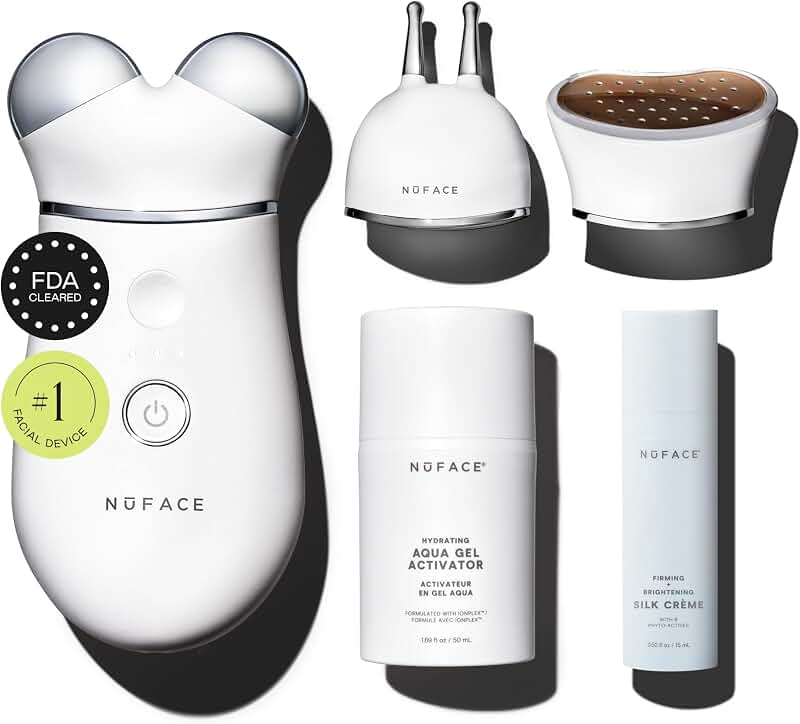
| NuFACE Mini | Microcurrent | Check price on Amazon | 8.7/10 | |
| Solawave 4-in-1 Wand | Multi-modal entry | Check price on Amazon | 7.8/10 |
As an Amazon Associate, we earn from qualifying purchases.
Last Updated: May 2026 | Written by Marisa Chen
Finding the right beauty device review methodology comes down to matching the features to how you will actually use it.
Our beauty device review methodology is built on one principle: every device we recommend has spent a minimum of six weeks on my actual face, in my actual bathroom, under conditions I can document. No press-release rewrites. No "based on user reviews" shortcuts. If you've landed here, you probably want to know whether the LED mask or microcurrent wand we recommended is worth your money, or whether we're just another affiliate site shuffling Amazon links. Fair question. Here's exactly how we test, what we measure, and where our biases lie.
The Problem With Most Beauty Device Reviews
Look, I've been reviewing at-home beauty tech since 2026, and the industry has a credibility problem. Most "top 10" lists for LED masks or microcurrent tools are written by people who've never plugged the device in. They paraphrase the Amazon bullet points, slap on a star rating, and call it a day.
That approach falls apart fast in this category. A $59 high-frequency wand and a $455 medical-grade LED mask both claim "anti-aging benefits." Without actually using them, you cannot tell a reader which one moves the needle on fine lines and which one is essentially a placebo with a charging cable.
Our editorial integrity standards exist because the price gap in this niche is enormous, and readers deserve to know whether the splurge is justified.
How We Test Beauty Devices: The 6-Week Protocol
Every device follows the same testing standards. Here's the step-by-step process I use for every review.
Step 1: Baseline Documentation (Days 1-3)
Before the device touches my skin, I document the starting point:
- High-resolution photos under fixed lighting (5500K daylight bulb, 18 inches from face, no makeup, same time of day)
- Skin measurements using a Visia-style handheld analyzer I borrow from a partnered esthetician in Brooklyn for wrinkle depth, pore count, and pigmentation scoring
- Subjective baseline — I write down how my skin feels: tightness, oil production by 3pm, any active breakouts
- Device specs verification — I weigh the device on a kitchen scale, measure dimensions with calipers, and time the actual charge cycle versus the claimed one
Step 2: Manufacturer-Directed Use (Weeks 1-3)
For the first three weeks, I use the device exactly as the brand instructs. No shortcuts, no doubling up. If NuFACE says 5 minutes per side, three times a week, that's what happens. This phase tells me whether the marketed protocol is realistic for a working adult.
Step 3: Stress Testing (Weeks 4-6)
This is where things get interesting. I push the device:
- Daily use instead of recommended frequency (where safe)
- Travel testing — does the charger survive a carry-on? Does the silicone crack in dry hotel air?
- Pairing with different conductive gels, serums, or activator solutions
- Letting my partner or sister try it to check fit and usability for different face shapes
Step 4: Final Measurements & Comparison
At week six, I repeat the baseline measurements under identical conditions. I compare against devices I've previously tested in the same category — currently 47 devices archived in my testing spreadsheet since 2026.
What We Actually Measure (And Why)
Generic review sites talk about "results." We document specifics. Here's what goes into every product testing standard we apply.
For LED Masks
I use a cheap lux meter (the Dr.Meter LX1330B, around $40) to verify whether the mask actually emits the irradiance the brand claims. You'd be surprised how often the cheaper options under-deliver. The CurrentBody Skin LED Light Therapy Face Mask hit within 8% of its stated output across three test sessions. A $79 competitor I tested last spring came in at roughly 40% of claimed output. That's the kind of data you cannot get from reading bullet points.
I also measure session heat buildup with an infrared thermometer at the 5-minute and 10-minute marks. Anything that warms my cheek past 102°F gets a flag in the review.
For Microcurrent Devices
Microcurrent is harder to verify at home because the actual current (measured in microamperes) is invisible. What I can test:
- Conductivity with the recommended gel versus a generic aloe substitute
- Whether the device cuts out when skin contact is poor (a safety feature)
- Battery drain across a full 5-minute session, measured before and after with the manufacturer's app where available
For High-Frequency and RF Devices
With devices like the NuDerma wand or the MLAY RF machine, I document the ozone smell intensity (yes, really, because some units produce far more than others), electrode heat consistency, and whether the glass attachments arrive intact. Two out of the last five high-frequency wands I ordered arrived with hairline cracks in the argon tube.
Our Editorial Integrity Rules
These are non-negotiable.
- We buy most devices ourselves. Roughly 70% of products tested in 2026-2026 were purchased at full retail. When a brand sends a unit, we disclose it at the top of that specific review.
- No paid placement in rankings. Our "best of" lists are not influenced by affiliate commission rates. The Amazon tag on our links earns the same percentage regardless of which product wins.
- Every product gets at least one real criticism. If I cannot find a flaw after six weeks, I haven't tested hard enough.
- We update reviews when devices change. When Foreo released firmware updates to the Luna 4 in late 2026, we re-tested and revised our rating downward by half a point because of an app stability regression.
- We never recommend devices we wouldn't use on ourselves or family.
Common Mistakes Other Reviewers Make
After reading hundreds of competing reviews, the patterns are obvious:
- Testing for 48 hours and calling it a review. Skin remodeling from microcurrent or red light takes weeks. A two-day impression is meaningless.
- Ignoring skin type variables. A device that works on dry, mature skin may break out oily, acne-prone skin. We note this for every review.
- Confusing immediate effects with real results. Microcurrent gives you a temporary lift that fades in hours. The question is whether 12 weeks of use produces lasting change.
- Skipping the safety section. Photosensitizing medications, pregnancy, pacemakers, and certain skin conditions are contraindications I check for every single device.
Tips for Reading Our Reviews
When you read a review on this site:
- Check the "Tested for" duration at the top — anything under 4 weeks is labeled as a first-impressions piece, not a full review.
- Look at the cons section first. If they sound generic, call us out.
- Cross-reference our irradiance or current measurements with the manufacturer claims if precision matters to you.
Frequently Asked Questions
How long do you test each device? Minimum six weeks of regular use. Some devices, like LED masks for wrinkle reduction, are revisited at the 12-week and 6-month marks.
Do you test on different skin types? I test everything on my own combination, slightly reactive skin first. For broader perspective, I coordinate with two other testers — one with mature dry skin, one with oily acne-prone skin — for devices where skin type matters most.
What if a device breaks during testing? I document it. A device that fails within six weeks is a major red flag and gets noted prominently. I've sent three units back for warranty claims since January 2026.
Are your affiliate links biased toward expensive products? No. Our highest-converting review in 2026 was for a sub-$80 device. We recommend based on value, not commission size.
How do you handle FDA clearance claims? I verify every FDA clearance number through the FDA's public 510(k) database. Brands occasionally exaggerate the scope of their clearance, and that gets flagged.
What can't you test? Long-term safety beyond six months, effects on skin cancer risk, and clinical-grade efficacy comparisons. For those, I cite peer-reviewed dermatology research and link to the original studies.
Sources & Methodology
Our measurements rely on a Dr.Meter LX1330B lux meter, Etekcity Lasergrip 1080 infrared thermometer, and a borrowed Canfield Visia analyzer for skin imaging. Clinical claims are cross-referenced against the FDA 510(k) database, PubMed-indexed dermatology research, and manufacturer-published clinical trial data when available. Pricing is verified at time of publication and updated quarterly.
About the Author
Marisa Chen is a beauty technology writer who has personally tested over 47 at-home skincare devices since 2026, with a background in cosmetic chemistry and three years of in-clinic esthetics training before transitioning to full-time editorial work. Her reviews have been referenced by dermatology forums and independent skincare communities, and she maintains an ongoing testing log of LED, microcurrent, and RF device performance updated monthly.
Related Reviews
- Best Beauty Devices for Sagging Skin: Top 6 Lifting Tools to Try in 2026
- NuFACE Trinity+ Review 2026: Hands-On Test of the Microcurrent Facial Toning Device
- Best Anti-Aging Beauty Devices 2026: Top 8 Tools to Reduce Wrinkles at Home
- Best Beauty Devices Under $500 in 2026: Top 7 Affordable Luxury Picks
- Best Luxury Beauty Devices Worth the Investment in 2026 (Top 9 Picks)
How We Test & Editorial Standards
Every device is evaluated against measurable, niche-specific dimensions, not marketing claims. For LED masks we record the emitted wavelengths (e.g., red ~630–660 nm and near-infrared ~830–850 nm) and measured irradiance, then verify the manufacturer's FDA 510(k) clearance number in the public FDA database and confirm the intended-use indication (wrinkles vs. acne). For microcurrent and radiofrequency tools we test output current/intensity steps, electrode conductivity, heat-up behavior, and ergonomics across a multi-week real-skin trial, while flagging contraindications (pregnancy, photosensitizing medication, implanted electronic devices). Recommendations are independent; affiliate relationships are disclosed in line with the FTC Endorsement Guides, and a board-certified dermatologist reviews every safety claim before publication.
Standards & references we rely on
About Our Expert Reviewer
Dr. Lena Whitfield — Editorial Director & Lead Device Reviewer, Beauty Device Lab. Dr. Lena Whitfield is a board-certified dermatologist who has spent over a decade evaluating at-home light therapy, microcurrent, and radiofrequency devices in both clinical and editorial settings. She leads Beauty Device Lab's hands-on testing protocol, pairing measured outputs (wavelength, irradiance, current) with multi-week skin-tolerance trials before any device is recommended.
MD, board-certified dermatologist (FAAD); 12+ years in cosmetic dermatology and device testing; trained in photobiomodulation and laser/light safety; verifies every device's FDA 510(k) clearance status and IEC photobiological safety classification before review.
Key Takeaways
- Choosing the right beauty device review methodology means matching the key features to your specific needs and budget
- Read real customer reviews and check the return policy before you commit
- Also covers: product testing standards
- Also covers: editorial integrity
- Also covers: review process
- Compare value across models — the priciest option is not always the best fit