If your nuface mini too strong on thin eyelid skin is producing sharp tingling, involuntary muscle twitches, or a metallic taste when you glide near the orbital bone, the cause is almost always one of three things: insufficient conductive gel, an intensity setting that exceeds what eyelid tissue can buffer, or device contact with bone rather than muscle belly. The NuFACE Mini delivers 335 microamps of low-level current, which is safe for the cheek, jaw, and brow region, but the skin over your upper and lower eyelids is roughly 0.5 mm thick — four to five times thinner than your cheek. That thinness means current density spikes locally, and your trigeminal nerve fires harder than it would on plumper tissue. The fix is a layered approach: thicker gel, slower glides, intensity step-down, and strict avoidance of the orbital rim itself.
Why thin eyelid skin reacts so intensely to microcurrent
Microcurrent works by passing a sub-sensory electrical signal through the dermis to stimulate ATP production and re-educate facial muscles. On average facial skin (1.5–2 mm thick), the current disperses across a wide volume of tissue and you feel almost nothing. On eyelid skin, the same current has nowhere to spread — it concentrates, and the underlying orbicularis oculi muscle, which is one of the most innervated muscles in the body, fires immediately. That is the source of the sharp tingle, the eyelid flutter, and sometimes a faint flash of light (a phosphene) if current crosses too close to the optic structures.
The best nuface mini too strong on thin eyelid skin for your situation depends on how you plan to use it and where.
NuFACE’s official instructions explicitly warn against placing the spheres directly on the eyelid or inside the orbital rim. If you have been gliding across the lid itself, stop immediately — the tingling you feel is your body telling you the current is too concentrated for that anatomy. The Mini was engineered for the lower face and brow; eye-area work belongs to the NuFACE Trinity ELE attachment or, more often, a non-electrical modality entirely.
Step-by-step troubleshooting for too-strong tingling
1. Re-apply gel — then apply more
Dry or thinly applied gel is the single most common cause of unwanted tingling. NuFACE Aqua Gel or any water-based, electrolyte-rich gel must be visibly slick and beaded on the skin for the entire glide. If the gel has absorbed, dried, or migrated off the treatment zone, current jumps from sphere to skin through air resistance, which feels like a sting. Re-apply every 60–90 seconds. For thin skin areas, double the layer.
2. Drop the intensity
The Mini has three levels. Most people default to level 3 because the manual suggests it for “normal” skin. If you have thin, fair, or reactive skin — or if you are over 55, when dermal thinning accelerates — start at level 1 for the brow and upper cheek transitions. You can step up only after a full week of comfortable sessions.
3. Stay 1 cm away from the lash line and orbital rim
Draw an imaginary line along the brow bone above and the upper cheekbone below. That is your treatment perimeter for the eye zone. Never cross it. The spheres should glide along the brow bone outward toward the temple, and along the upper cheek outward toward the ear — never across the lid itself.
4. Slow your glide speed
Fast strokes generate more perceived intensity because the spheres lose gel contact briefly between movements. A 5-second glide from inner brow to temple is correct. A 1-second flick is not.
5. Check sphere cleanliness
Oxidized or product-coated spheres concentrate current unevenly. Wipe them with a damp microfiber cloth before every session. If they look dull, polish gently with a soft toothbrush and water.
When microcurrent is the wrong tool for your eye area
For some people — particularly those with very fair, very thin, or rosacea-prone skin, or anyone with a history of migraines triggered by electrical stimuli — microcurrent on the upper face will never feel comfortable, no matter how much gel you apply. That is not a defect; it is anatomy. The smarter pivot for eye-area concerns (crepiness, fine lines, puffiness, dark circles) is red and near-infrared LED light therapy. LED delivers no sensation at all, no current, no muscle stimulation — it works through photobiomodulation, where mitochondria in skin cells absorb specific wavelengths (typically 630–660 nm red and 830–850 nm near-infrared) and increase ATP production through a completely non-electrical pathway.
LED is safe directly over closed eyelids in nearly all consumer devices, and several full-face masks now include dedicated under-eye coverage that microcurrent simply cannot match. If your Mini is staying in the drawer because the tingling ruins the experience, a quality LED mask is usually the better daily-use device for the eye region. You can still use the Mini below the cheekbone for lift and contouring.
Recommended LED alternatives for sensitive eye-area skin
The masks below were selected because each one offers full eye-zone coverage with closed-lid safety, uses clinically studied wavelengths, and presents a gentler alternative when microcurrent feels too aggressive on thin skin. See our guide to LED masks for sensitive skin for additional context.
| Mask | Wavelengths | Form factor | Best for |
|---|---|---|---|
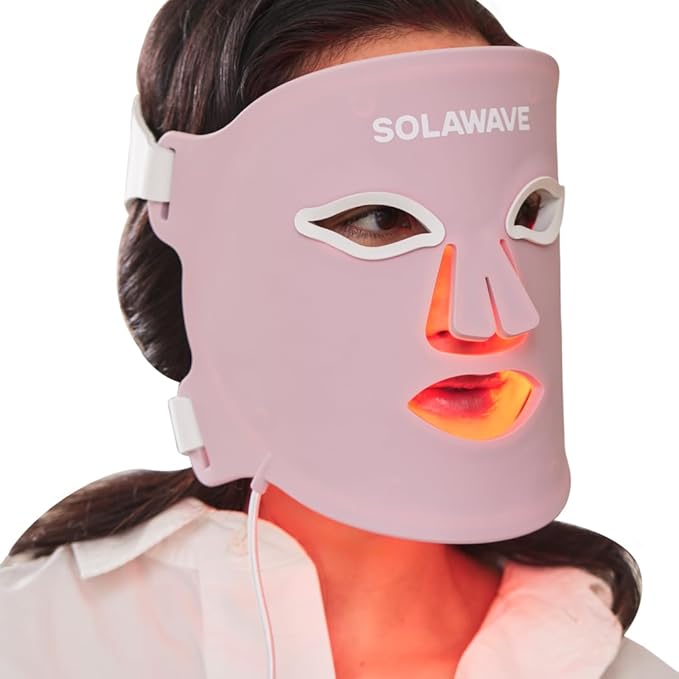
| Solawave | Red, Deep Red, NIR, Amber | Rigid full-face | Multi-wavelength targeting |
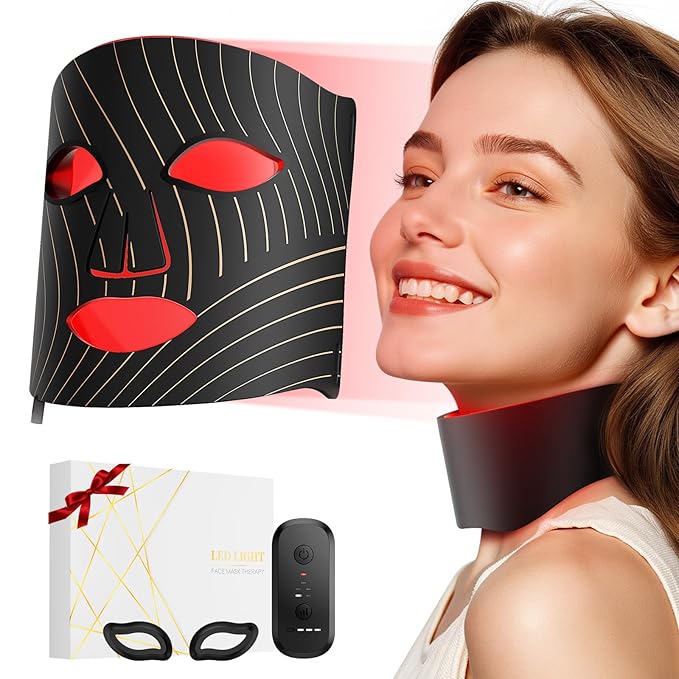
| ONLUKY | Red + NIR | Face + neck | Wider coverage |
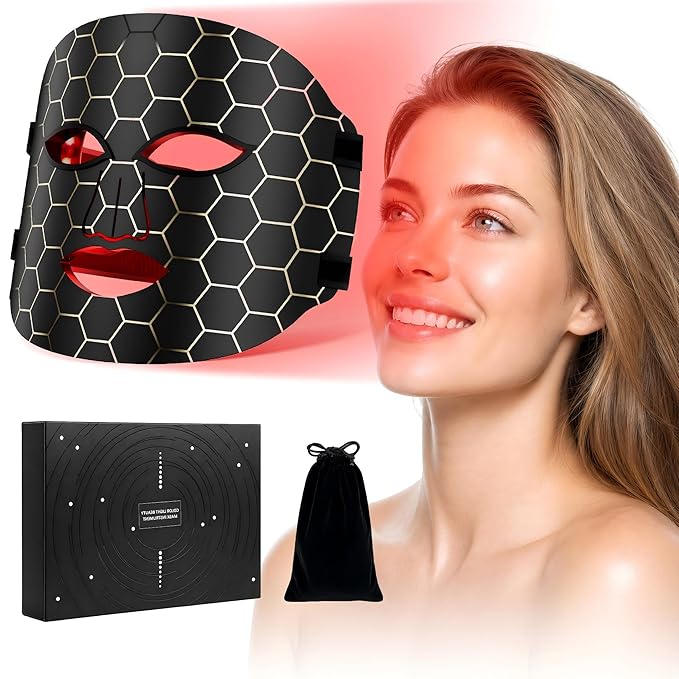
| Flexible Silicone 7-Mode | 7 light modes | Soft silicone | Side-sleeping comfort |
| NEWKEY 4D | 630 nm red | Contoured 4D fit | Snug eye-zone seal |
| Verfubo | Red + NIR | Face + neck | FDA-cleared assurance |
Solawave LED Light Therapy Face Mask — best multi-wavelength option
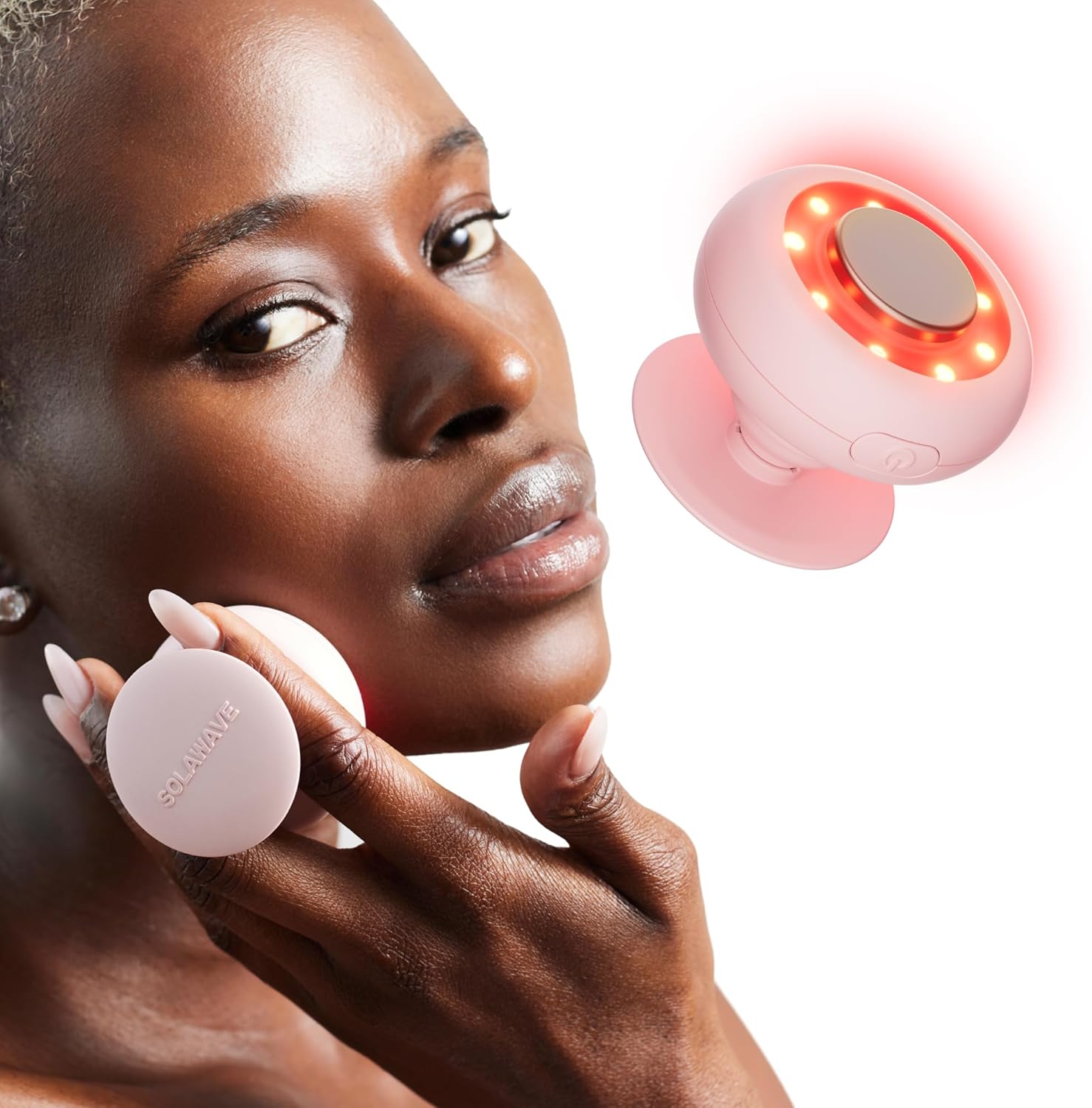
The Solawave mask delivers four distinct wavelengths (red, deep red, near-infrared, and amber) so you can target collagen stimulation and surface tone in the same session. The rigid form factor sits stably on the brow and cheekbones without pressing into the eyelid itself, and closed-lid use is comfortable for the standard 10-minute cycle. For anyone whose NuFACE Mini feels too strong on the orbital area, this is a sensation-free alternative that still produces measurable changes in fine-line depth over 8–12 weeks. Solawave LED Light Therapy Face Mask | Red, Deep Red, N
ONLUKY Red Light Therapy LED Face Mask with Neck — best for full upper-body coverage
If you also want to address neck crepiness alongside under-eye concerns, ONLUKY’s integrated neck panel doubles your treatable surface area in a single session. The eye cutouts are sized to clear the orbital rim while still bathing the lid in red and NIR light, which is exactly the geometry you want when microcurrent is irritating that zone. Red Light Therapy for Face,LED Face Mask Light Therapy
Flexible Silicone LED Face Mask, 7 Light Modes — best soft-fit comfort
Rigid masks can feel claustrophobic during longer sessions. This flexible silicone option molds to your facial contours so the LEDs sit a consistent distance from the skin across the cheek, brow, and under-eye — important because LED intensity falls off sharply with distance. The seven modes let you experiment with color combinations without buying multiple devices. LED Face Mask with 7 Light Modes, 96 3-in-1 LED Chips,
NEWKEY 4D LED Red Light Therapy Face Mask — best contoured eye-zone fit
The 4D contour follows the orbital ridge so the under-eye LEDs sit close enough to deliver effective photon density without pressure on the eyelid itself. At a clinically studied 630 nm red wavelength, it is a focused, no-frills option for users who want a single-purpose collagen tool. 4D LED Red Light Therapy Mask for Face Skin Glowing,630
Verfubo FDA-Cleared Red Light Therapy for Face & Neck — best regulatory assurance
For buyers who prioritize FDA clearance as a baseline quality signal, the Verfubo mask combines red and near-infrared coverage across face and neck and arrives with the documentation that many consumer LED masks lack. FDA-Cleared Red Light Therapy for Face & Neck, Recharge
How to safely combine NuFACE Mini and LED for sensitive eye skin
You do not need to retire the Mini. The smartest 2026 protocol for anyone with thin orbital skin is to zone your devices: use the NuFACE Mini at level 1–2 below the cheekbone and along the jaw, where there is enough tissue to disperse current comfortably, and use a quality LED mask for everything above the cheekbone. This split lets the Mini lift the lower face and the LED mask treat the eye area, forehead, and any rosacea-prone zones without irritation.
Sequence them in this order: cleanse, apply microcurrent gel, run the NuFACE Mini for 5 minutes on the lower face, wipe gel away thoroughly, then run the LED mask for 10 minutes with bare skin (no serums underneath — most actives diminish LED penetration). Finish with a hydrating serum and moisturizer. For more on layering, see our microcurrent vs LED comparison and our NuFACE Mini vs Trinity 2026 breakdown.
What if the tingling is happening on the cheek too?
If you feel sharp tingling outside the eye area, the most likely culprit is dried gel. Test it: pause mid-session, look in the mirror, and check whether the spheres are leaving a wet trail. If not, re-apply. If the tingling persists with fresh gel at level 1 on the cheek, the spheres themselves may be oxidized — NuFACE recommends replacement every 12–18 months of daily use. A worn sphere concentrates current at micro-pits in the metal and feels noticeably sharper than a fresh one.
Frequently Asked Questions
Can I use the NuFACE Mini directly on my upper eyelid?
No. NuFACE’s official guidance and every dermatologist who works with microcurrent agree the spheres must stay outside the orbital rim. The lid skin is too thin to disperse current safely, and you risk concentrated stimulation of the orbicularis oculi and trigeminal nerve branches. Treat along the brow bone outward and the upper cheekbone outward instead.
Why does my NuFACE Mini make my eye twitch?
Eyelid twitching during a session means current is reaching the orbicularis oculi muscle. Stop, reposition the spheres at least 1 cm below the brow bone or above the cheekbone, drop one intensity level, and add more gel. If twitching persists even on the cheek, the sphere placement is too close to a sensitive nerve branch — adjust angle and direction.
Is microcurrent safe around the eyes if I have had Botox?
Studies suggest microcurrent does not accelerate Botox metabolism in the doses delivered by consumer devices, but most injectors recommend waiting 10–14 days after treatment before resuming use, and avoiding direct contact over freshly injected sites. For periorbital Botox specifically, keep the spheres well outside the treated zone.
Does adding more gel actually reduce tingling?
Yes — dramatically. Gel is the conductive medium. With thick, slick gel, current spreads evenly across a wider tissue volume and feels like nothing. With thin or dried gel, current arcs through micro-air-gaps and feels sharp. The single most effective troubleshooting step is doubling your gel layer and re-applying every 60–90 seconds.
Can I use the NuFACE Mini with regular aloe gel instead of NuFACE Aqua Gel?
Pure aloe vera gel is more conductive than nothing but less consistent than purpose-built microcurrent gel. The Aqua Gel is formulated with a specific electrolyte balance that maintains conductivity for 90+ seconds. Aloe alone will dry out faster and may produce the exact tingling sensation you are trying to eliminate. If you substitute, choose a hyaluronic-acid-rich gel and re-apply twice as often.
Will an LED mask help with under-eye crepiness better than the NuFACE Mini?
For crepiness specifically (loss of dermal thickness and elasticity), red and near-infrared LED at clinically studied wavelengths stimulates fibroblast collagen production and is generally better tolerated on thin skin than microcurrent. Microcurrent excels at lifting and re-toning muscle; LED excels at thickening and smoothing skin. For under-eye crepiness, LED is the more targeted tool.
How long should I wait before declaring the NuFACE Mini “too strong” for me?
Give it two weeks of properly executed sessions — level 1, abundant gel, slow glides, strict orbital perimeter — before concluding the device is wrong for your eye area. Most people who initially feel intense tingling adapt within 7–10 sessions as they refine technique. If after two weeks the upper face still stings on level 1 with technique dialed in, switch eye-area work to LED and reserve the Mini for jaw and cheek.
Key Takeaways
- Choosing the right nuface mini too strong on thin eyelid skin means matching capacity and output ports to your actual devices
- Always check actual watt-hours (Wh), not just watts — runtime depends on Wh, not peak output
- Also covers: nuface mini intensity too high
- Also covers: nuface mini eyelid tingling fix
- Also covers: reduce nuface mini sensation eyes
- Compare price-per-Wh across models to find the best value for your budget