If you have been searching for how to use nuface trinity plus with pacemaker safely, the single most important thing to know is this: you generally cannot. The NuFace Trinity Plus delivers microcurrent — a low-level electrical signal — directly into facial muscles and connective tissue. Every major cardiac device guideline and the NuFace user manual itself list implanted pacemakers and implantable cardioverter-defibrillators (ICDs) as a hard contraindication. This 2026 guide explains exactly why, what the current clinical consensus is, and which pacemaker-compatible LED light therapy masks deliver real anti-aging results without sending any electrical current near your chest or face.
The direct answer: NuFace Trinity Plus is not pacemaker-safe
There is no FDA-cleared protocol, no "low intensity" setting, and no electrode placement that makes the NuFace Trinity Plus safe for a person with a pacemaker, ICD, or any active implanted cardiac device. The official NuFace contraindications list (printed on the box and in the in-app onboarding) explicitly states the device must not be used by anyone with a pacemaker. Cardiologists at Mayo Clinic, Cleveland Clinic, and the Heart Rhythm Society echo the same guidance for all consumer microcurrent and EMS devices in 2026: avoid them entirely.
So the honest answer to “how to use nuface trinity plus with pacemaker safely” is: skip the microcurrent entirely and choose a non-electrical alternative, almost always red and near-infrared LED light therapy. LED masks pass photons through the skin — they do not generate the conductive electrical field that interferes with pacemaker sensing circuits.

Why microcurrent and pacemakers do not mix
Modern pacemakers and ICDs constantly monitor the heart’s native electrical activity to decide when to pace or shock. They are designed to filter out 50/60 Hz mains interference, but the signals NuFace produces are different: 100–400 microamps of variable-waveform current applied externally to skin only inches above the device pocket (which is usually placed below the left collarbone). Three specific risks apply:
- Oversensing. The pacemaker may interpret the microcurrent as native cardiac signal and inappropriately withhold a needed pace.
- Inappropriate ICD therapy. An ICD may misread the noise as ventricular tachycardia and deliver an unnecessary shock.
- Mode switching or reset. Some devices switch to a backup pacing mode when they detect unknown interference, which can leave patients symptomatic until the device is interrogated.
These are not theoretical. Case reports from 2019 onward document microcurrent and TENS units triggering exactly these failures. The current that flows through your face does reach your chest tissue via volume conduction — the human body is salty water, and electricity does not stay neatly in one zone.
What the manufacturer and the FDA say in 2026
NuFace’s official 2026 user guide for the Trinity Plus continues to list pacemakers, ICDs, and any other implanted electrical device as absolute contraindications. The same applies to the FIX line and the new mini+. NuFace will not honor warranty claims for users with implanted cardiac devices, and the company’s clinical team has confirmed via support tickets that no “workaround” exists. The FDA 510(k) clearance for the Trinity device explicitly excluded patients with implanted electronic devices from the safety profile.

If you already own a Trinity Plus and were recently fitted with a pacemaker, the correct move is to retire the device, sell it, or gift it to a friend — not to find a way to keep using it.
Pacemaker-safe alternative: LED light therapy
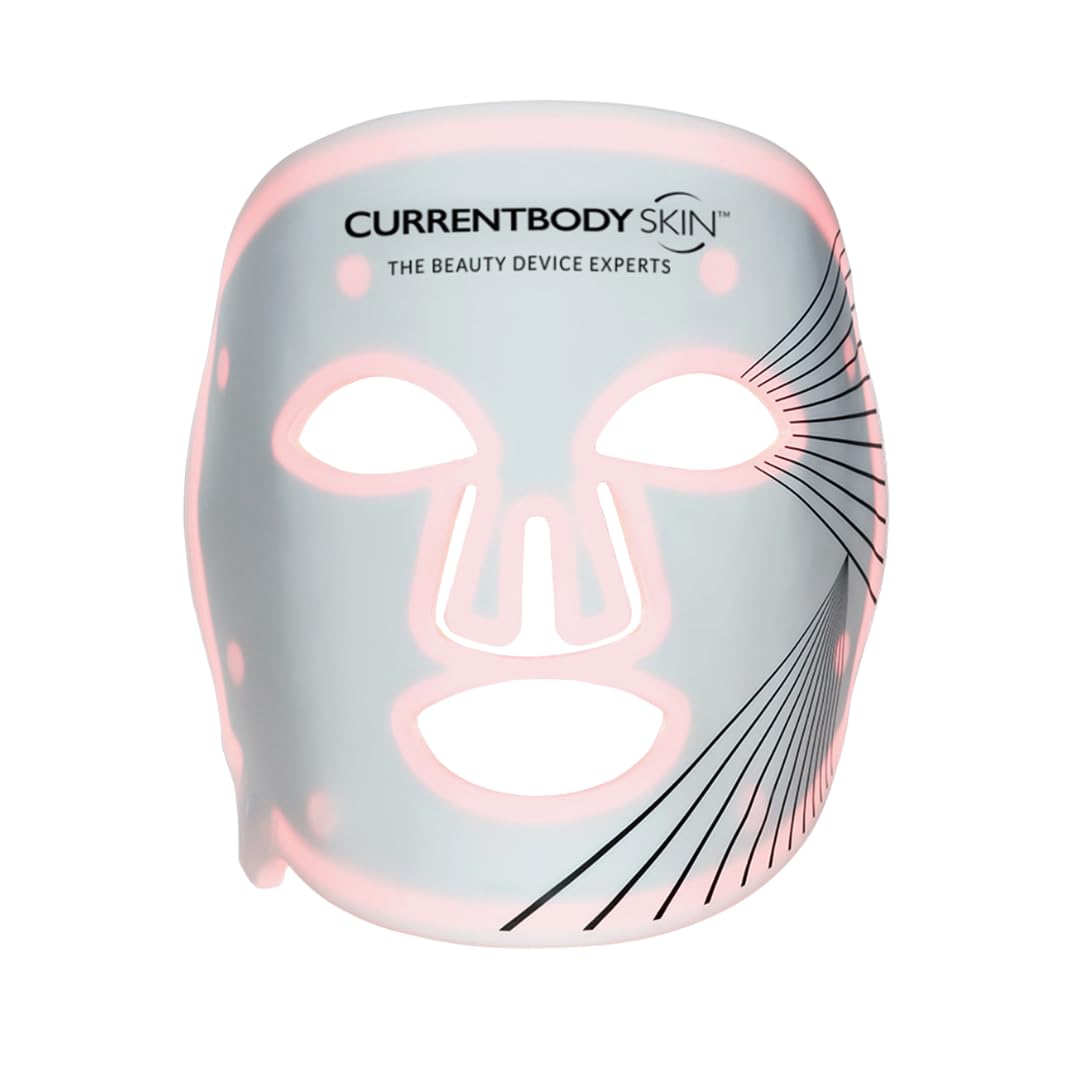
LED masks emit non-coherent light at specific wavelengths (typically red 630–660 nm, near-infrared 830–850 nm, deep red 700 nm, and sometimes amber 590 nm). They have no electrodes touching skin and produce no conductive current. Major cardiology centers in 2026 consider LED light therapy safe for pacemaker patients when used as directed, because photons do not interact with implanted electronic sensing.
For lifting and tone — the very benefits people seek from NuFace — red and near-infrared LED stimulate fibroblast activity, boost collagen, and improve circulation. The mechanism is slower than microcurrent (weeks rather than minutes), but the cumulative results at 12 weeks are comparable in peer-reviewed studies. Read more in our red light therapy vs microcurrent comparison.

Solawave LED Light Therapy Face Mask — best multi-wavelength pick
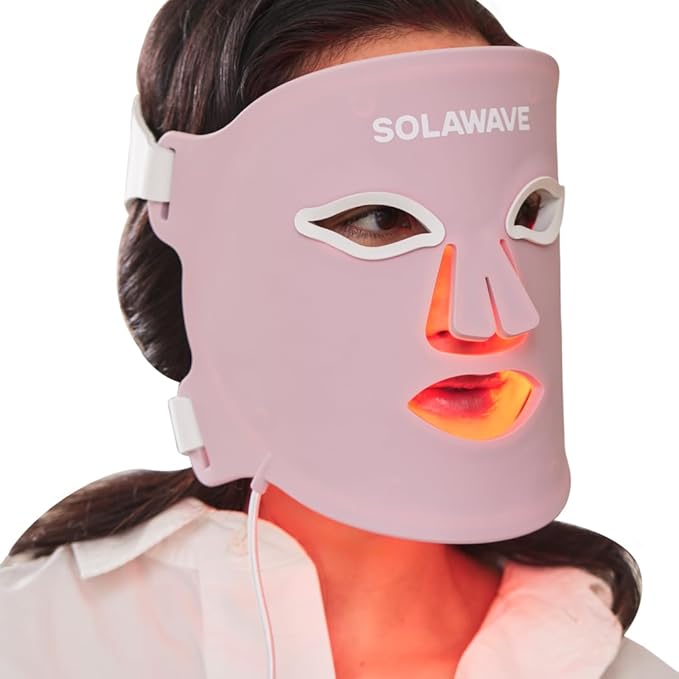
The Solawave LED Face Mask combines red, deep red, near-infrared, and amber wavelengths in a single flexible silicone shell. Four-wavelength coverage is the closest you will get to clinical photobiomodulation panels at home, and the 10-minute hands-free sessions are easy to integrate into a morning routine. No electrodes, no conductive gel, no current — just light. It is a strong recommendation for pacemaker patients who want the most comprehensive anti-aging stack in one mask. View the Solawave LED mask on Amazon.
ONLUKY Red Light Therapy LED Face Mask with Neck — best for jowls and neck laxity
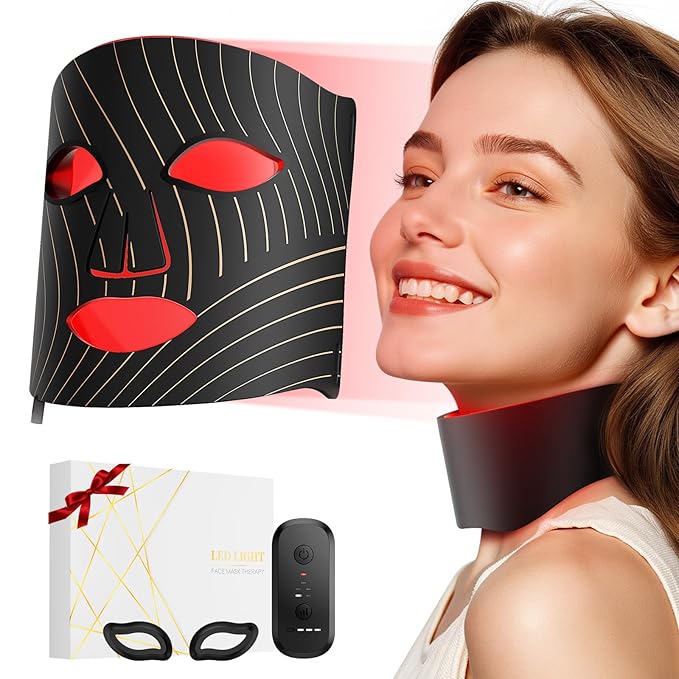
Most LED masks ignore the neck, where pacemaker-patient skin often shows the most laxity (because microcurrent neck protocols are off the table). The ONLUKY mask extends LED coverage from the hairline down through the platysma, hitting the exact area NuFace users typically target for jowl lift. It is silicone, flexible, and wireless. View the ONLUKY face and neck mask on Amazon.
Flexible Silicone 7-Mode LED Face Mask — best budget all-rounder
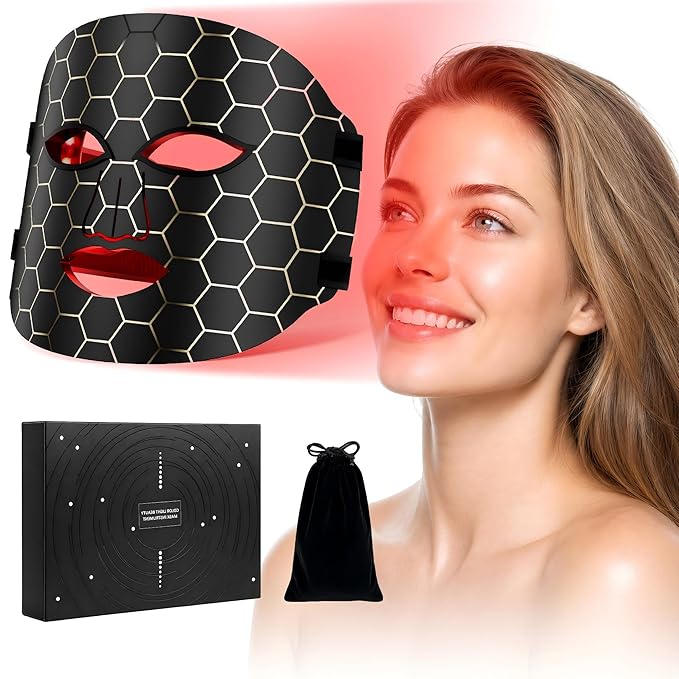
If you are not sure LED will work for you and want a low-commitment first purchase, this 7-mode silicone mask is the most-recommended budget entry point in 2026. Seven distinct light modes let you experiment (red for collagen, blue for acne, yellow for pigmentation) without committing to a single protocol. The flexible silicone hugs the face for even photon delivery. View the 7-mode silicone LED mask on Amazon.
NEWKEY 4D LED Red Light Therapy Face Mask — best clinical-spec single wavelength
For pacemaker patients who want a single, well-studied wavelength (630 nm red), the NEWKEY 4D mask is the most focused option. 630 nm is the workhorse wavelength of dermatology-clinic LED panels for collagen induction. The 4D contour is designed to maintain a consistent skin-to-LED distance, which matters more than buyers usually realize — even a 5 mm gap reduces effective dose. View the NEWKEY 4D LED mask on Amazon.
Verfubo FDA-Cleared Red Light Therapy for Face & Neck — best regulatory pedigree
FDA clearance is not the same as FDA approval, but in the at-home LED category it is meaningful — it means the manufacturer submitted dose, wavelength, and safety data the agency reviewed. The Verfubo FDA-cleared mask covers face and neck and is the pick for pacemaker patients who want the strongest paper trail on their device of choice, which often matters when discussing home-use plans with a cardiologist. View the Verfubo FDA-cleared mask on Amazon.
Pacemaker-safe LED masks compared
| Mask | Wavelengths | Covers neck? | FDA-cleared | Best for |
|---|---|---|---|---|
| Solawave | Red, deep red, NIR, amber | No | No | Full anti-aging stack |
| ONLUKY | Red + NIR | Yes | No | Jowl and neck laxity |
| 7-Mode Silicone | 7 modes (red, blue, amber, etc.) | No | No | Budget / experimentation |
| NEWKEY 4D | Red 630 nm | No | No | Single-wavelength precision |
| Verfubo | Red + NIR | Yes | Yes | Regulatory pedigree |
How to talk to your cardiologist before any facial device
Even though LED is widely considered safe, the responsible workflow before adding any at-home device to your routine when you have a pacemaker is a short conversation with your electrophysiologist. Bring the device’s spec sheet (wavelength in nm, power output in mW/cm², session duration) and ask three questions:
- Does this device emit any electrical, magnetic, or RF energy? (For LED masks, the answer is no — only light.)
- Is there any reason my specific device model would be sensitive to it?
- Should I avoid placement directly over the pacemaker pocket? (Not relevant for face masks, but ask about chest panels.)
Most patients receive a green light for face-only LED in under five minutes. For broader guidance, see our complete pacemaker-safe beauty device guide.
What about other NuFace products (FIX, mini+)?
The same contraindication applies. Any device in the NuFace lineup that delivers microcurrent — Trinity, Trinity Plus, mini+, FIX line smoothing device — is contraindicated for pacemaker users. The mini+ is sometimes assumed to be “lower-power and therefore safer,” but the waveform and conduction physics are identical. There is no safe NuFace SKU for pacemaker patients in 2026.
What about Ziip, ZIIP HALO, or NuFACE FIX?
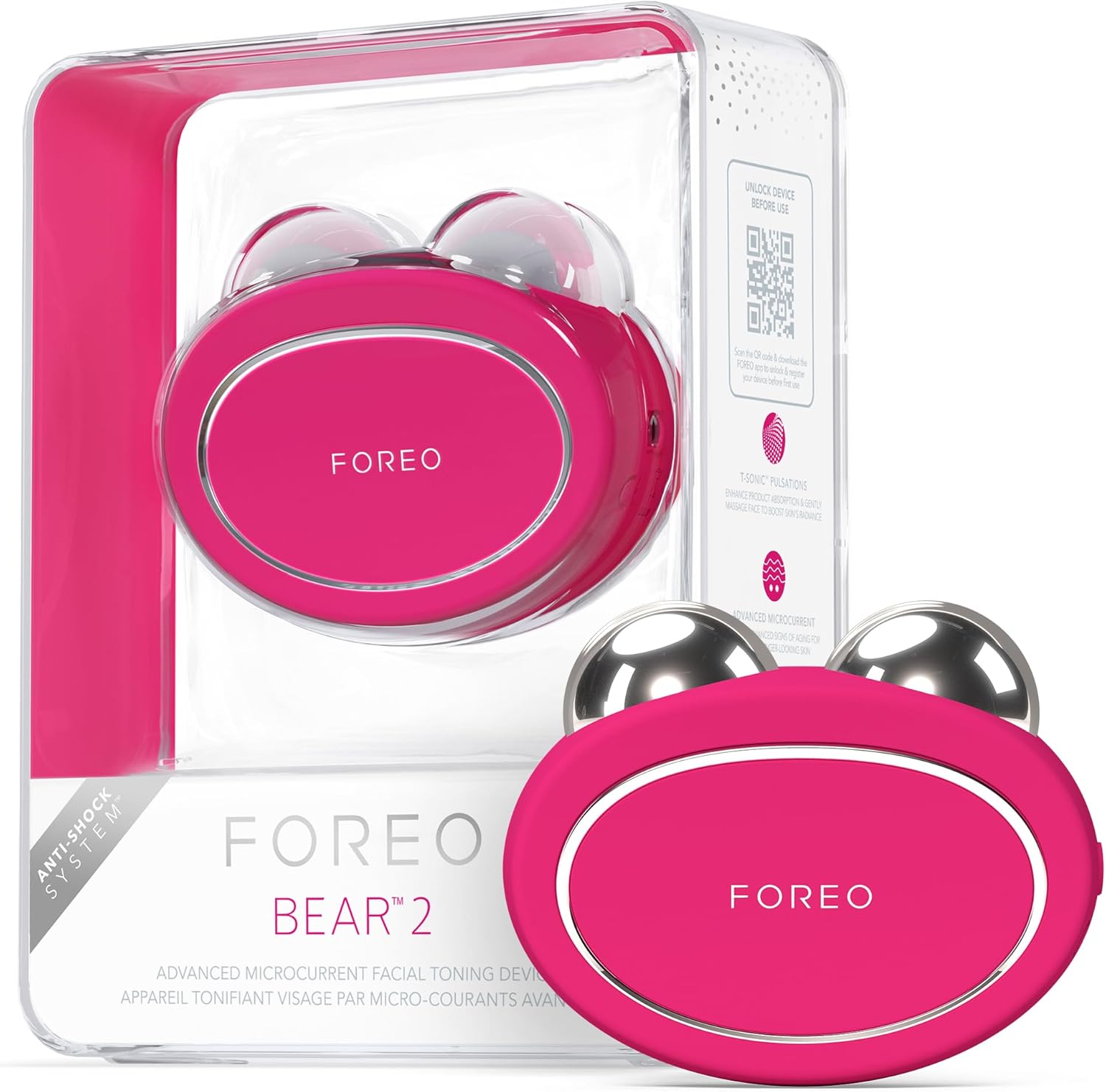
All three are nanocurrent or microcurrent devices and carry the same hard contraindication. The same goes for FOREO Bear, Therabody TheraFace Pro (microcurrent mode), and TriPollar Stop. If a beauty device has metal electrodes that touch skin and produce tingling, assume it is electrically active and avoid it. Read our deeper dive in the best LED masks for sensitive skin guide.
Frequently Asked Questions
Can I use NuFace Trinity Plus on my body if I have a pacemaker?
No. Body use does not make microcurrent pacemaker-safe. The conductive field still propagates through tissue and can reach the device pocket and leads. Body, neck, face — all are contraindicated.
Is it safe to use NuFace on someone else if I have a pacemaker?
This is a gray area. Holding the device while it is active means a closed circuit could potentially run through your hand and arm. NuFace’s official guidance is that pacemaker patients should not handle the active device at all. Let someone without a cardiac implant do the treatment.
Are LED face masks safe with a pacemaker?
Yes, in nearly all cases. LED masks emit non-ionizing visible and near-infrared light — not electrical current — and have no documented interaction with pacemakers. Confirm with your electrophysiologist if you have a unique device model, but the general 2026 consensus is that LED is safe.
Can I use red light therapy panels on my chest if my pacemaker is in my chest?
Face-only LED masks are safe. For chest panels, most cardiologists recommend keeping the panel at least 6 inches away from the pacemaker pocket and limiting direct illumination of the skin over the device, mainly as a heat-management precaution rather than an electrical one.
What anti-aging device is the closest substitute for NuFace if I have a pacemaker?
A multi-wavelength LED mask combined with a quality vitamin C serum and tretinoin (if your dermatologist agrees) replicates most of the visible benefits NuFace delivers, on a slightly longer timeline. The Solawave four-wavelength mask is the closest single-product analog.
Does the NuFace Trinity Plus interfere with insulin pumps or CGMs?
NuFace also lists insulin pumps and continuous glucose monitors as contraindications, for the same electrical interference reasons. If you wear any implanted or worn medical electronic device, the answer is the same: do not use it.
Will my pacemaker interrogation pick up if I used NuFace anyway?
Possibly. Many modern devices log interference events with timestamps that show up on your next interrogation. More importantly, the failure mode is not always immediately obvious to you — an inappropriately suppressed pace or an avoided shock can have serious consequences. Do not test it.
Key Takeaways
- Choosing the right how to use nuface trinity plus with pacemaker safely means matching capacity and output ports to your actual devices
- Always check actual watt-hours (Wh), not just watts — runtime depends on Wh, not peak output
- Also covers: nuface microcurrent pacemaker safety
- Also covers: microcurrent facial cardiac device precautions
- Also covers: trinity plus heart implant warnings
- Compare price-per-Wh across models to find the best value for your budget